


Keralam, the Water Leader · Blog
Why Ayurveda Needs Its Own Water Technology
Kerala’s Ayurvedic sector is running into a waste problem that conventional technology can’t solve. In this piece, I walk through the seven chapters of the TAGS AQUA vision and, alongside each one, the technologies that could help Ayurvedic institutions turn that vision into something they can actually build.
By Rohit Joseph, Director of Technology, TAGS Forum · 21 November 2026 · 15 min read
About this piece. On 21 November 2026, I spoke at the 8th CII Global Ayurveda Summit & Expo in Kochi on how technology can help Ayurvedic institutions manage their wastewater. This piece grew out of that talk and the discussions with doctors and hospital owners that followed it.
It’s written for Ayurvedic doctors, hospital owners and their associations, and for anyone interested in how the sector can manage its water better. It sets out the problem, the technologies available today and what each one offers an institution. I hope it starts a wider conversation, and I’d be glad to discuss how these ideas could work for any institution.
Why off-the-shelf systems keep failing
Wastewater treatment plants at Kerala’s hospitals often fall short.
Pollution Control Board inspections reported to the National Green Tribunal have found hospital plants that were non-functional or not working satisfactorily. Ayurvedic hospitals face an extra challenge: research shows their wastewater carries a heavy load of oil and grease, while the Board’s limit for oil and grease in treated water is just 10 mg/l.
Part of the problem is a mismatch between the technology and the waste. Most treatment systems on the market were designed for ordinary sewage or for mainstream industry, and Ayurvedic waste is neither. Therapies like abhyanga, pizhichil and dhara use large quantities of medicated oils and ghee, and the laundry that follows sends even more oil and grease down the drain. Add milk, buttermilk and herbal decoctions, and you end up with wastewater that carries an oil and organic load most standard plants simply aren’t built for. The oil coats the pipes, smothers the bacteria the plant relies on, and clogs filters and membranes. On the solid side, spent herbs, kizhi bundles and decoction residues create a waste stream of their own.
There’s also a second risk that’s easy to overlook. A plant is usually sized for the hospital as it is on the day it’s built. But Ayurvedic institutions grow. They add beds and therapy rooms, open a pharmacy unit or a wellness wing, and take in more patients every season. A plant designed for today’s load is overloaded a few years later, and the institution is left either struggling with a plant it has outgrown or tearing it out and starting again.
In other words, the sector has reached a point where it can’t just buy what everyone else is using. It needs systems designed around its own waste. That was the argument I made at the summit, and it’s what this piece is about.
It’s worth being clear about how the piece is put together. The vision I draw on belongs to TAGS AQUA, and it was written for Kerala as a whole. What I’ve added is the practical layer: for each part of that vision, the technologies an Ayurvedic hospital, clinic or manufacturing unit could use to make it real. Before getting to the technology, though, there’s a more basic question to answer. Why should the Ayurvedic industry be the one to take this on?
Why this is the Ayurvedic industry’s problem to solve
It’s tempting to answer that question with Ayurveda’s philosophy of harmony with nature. But I think the stronger argument is an economic one.
Kerala’s biodiversity, and especially its wealth of medicinal plants, is a genuine economic resource. On its own, though, a medicinal plant growing on a hillside or a farm doesn’t earn anything. Something has to turn it into value, and in Kerala, that something is the Ayurvedic industry.
The resource
Kerala’s biodiversity
Medicinal plants, clean water, a healthy ecosystem
The intermediary
The Ayurvedic industry
Hospitals, clinics, wellness resorts, medicine makers
The value
Kerala’s economy
Health care, health and wellness tourism, foreign exchange, jobs
Through Ayurveda, that biodiversity reaches the health sector as treatment for people in Kerala and beyond. It reaches tourism as the health and wellness travel that brings visitors from across India and abroad. Through those visitors, and through the export of Ayurvedic medicines and products, it brings foreign exchange into the state. Along the way, it supports a long chain of livelihoods, from the farmers and collectors who grow and gather the plants to the therapists and pharmacy workers who use them.
The link with tourism deserves particular weight. Ayurveda is one of the pillars of Kerala’s tourism brand, and Outlook Traveller reports that 60–70% of international tourists now seek Ayurvedic or wellness programmes during their stay. That makes wastewater at Ayurvedic centres more than one institution’s problem. A polluted canal beside a wellness resort is a risk to the “God’s Own Country” brand itself.
Sitting in the middle of that chain means the industry also carries the most risk when the foundation starts to erode. Its raw materials depend on a healthy ecosystem, because polluted water and degraded land affect both the supply and the quality of medicinal plants. Its brand depends on that ecosystem too. Health tourists pay a premium for “Kerala Ayurveda” because they associate it with clean water, green landscapes and natural healing, and a hospital beside a polluted canal quietly undercuts that promise. Its costs depend on how well it manages water as well, since water, the energy to heat it, failed treatment plants and compliance problems all end up on the balance sheet.
Seen this way, protecting water and biodiversity isn’t a favour the industry does for the environment. It’s how the industry protects its own resource base, its brand and its margins, which is exactly why it has more reason than anyone else to lead.
That also tells us what any new system has to get right. In practice, I’d suggest six principles:
- Protect the water bodies and the wider ecosystem around the institution, so that nothing harmful reaches canals, rivers, backwaters or groundwater.
- Treat water and waste as resources, returning them to the land and the herb garden wherever possible.
- Prefer low-energy and nature-based systems that suit Kerala’s climate and landscape.
- Design for the waste Ayurveda actually produces, especially oil, fat and grease, rather than copying a standard sewage plant.
- Design for growth, so the system can expand in step with the institution instead of being outgrown by it.
- Measure water use and discharge, so the institution can show that it manages water responsibly.
Put simply, the technology has to protect the same ecosystem the industry earns from.
Where the vision comes from
The vision I’m drawing on is that of TAGS AQUA, which aims to make Kerala a water leader within the next ten years, through technology and innovation suited to the state’s future and its sustainability goals.
Before we launched TAGS AQUA, we shared that vision on Facebook as a series called “കേരളം ദ വാട്ടർ ലീഡർ” (Keralam, the Water Leader). Over eight days, we posted seven chapters, each imagining a different part of Kerala’s water future, and on the eighth day we announced the launch.
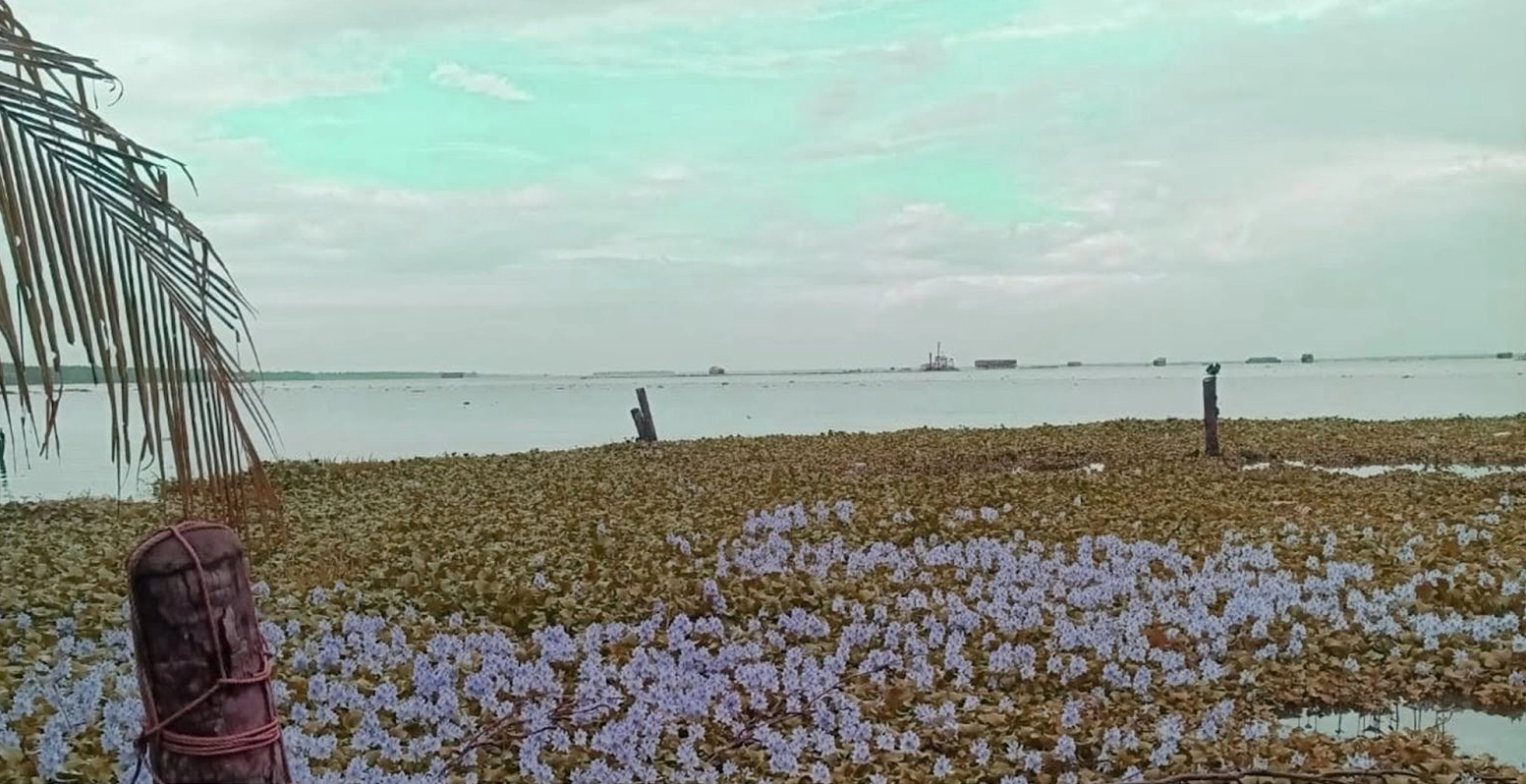
The thread running through all seven chapters is a paradox most Keralites will recognise. We get plenty of rain, and yet we face water stress, polluted canals and backwaters, and falling groundwater quality. Our problem isn’t how much water we have. It’s how we manage, treat and reuse it.
No technology is complete until we remember we are water.
The line at the heart of TAGS AQUA
In the sections that follow, each poster shows a chapter exactly as it was first shared. Beside it, I’ve tried to answer a practical question: what would it take for an Ayurvedic institution to make that chapter real?
Are you thirsty?
ദാഹിക്കുന്നുണ്ടോ?
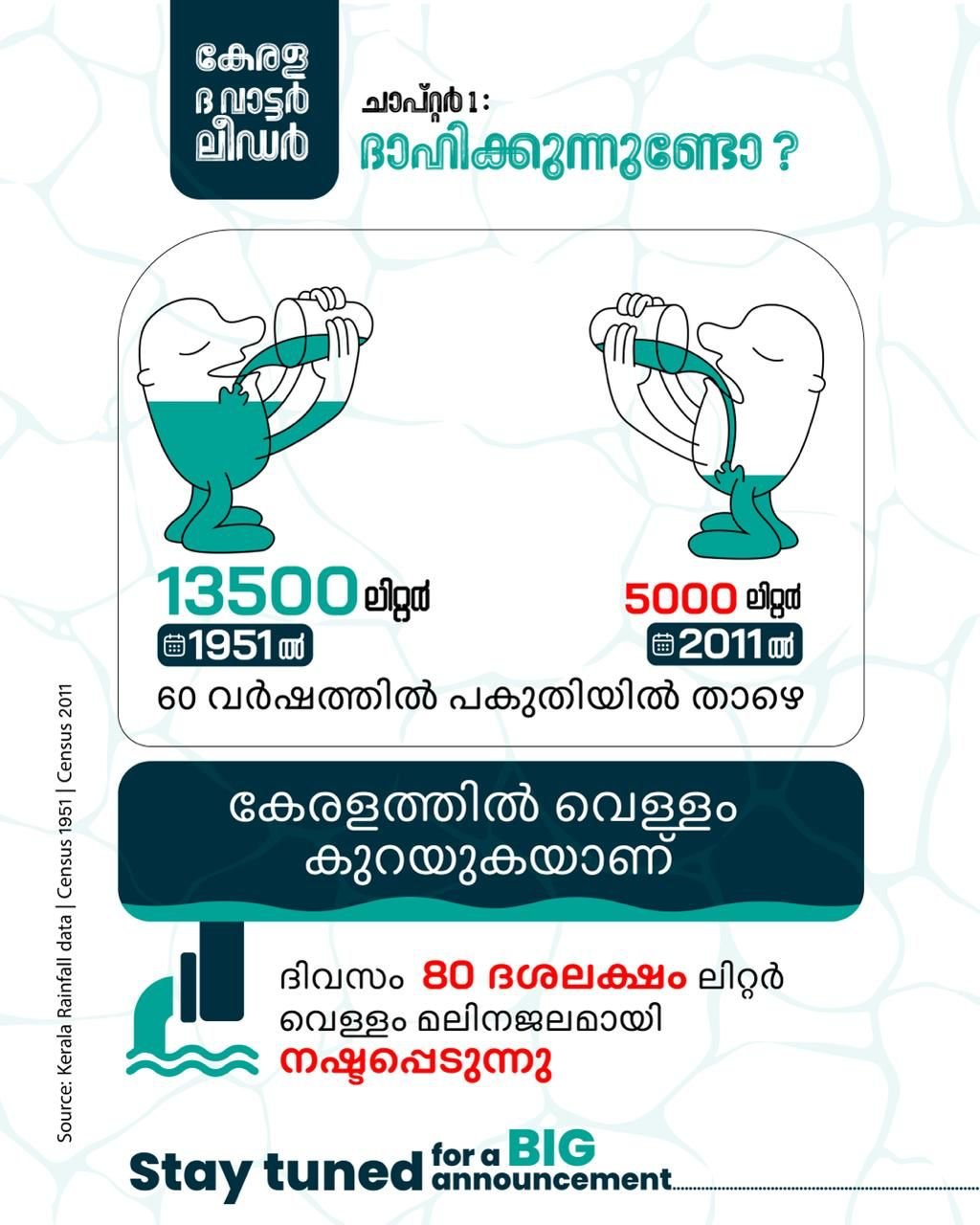
We opened the series with a simple question and a sobering set of numbers. According to the figures on the poster, the water available per person in Kerala fell from 13,500 litres in 1951 to 5,000 litres in 2011, less than half in sixty years, while around 80 million litres of water are lost as wastewater every day.
Source on the poster: Kerala rainfall data, Census 1951 and Census 2011.
Seen against that decline, Ayurvedic institutions have an unusual water profile:
- They need more water per patient than most health facilities. Dhara, kizhi, therapeutic baths and the preparation of decoctions all draw heavily on water, and much of it has to be heated.
- Their wastewater is different in kind, not just in volume. It carries medicated oils, ghee, milk and herbal residues that ordinary sewage plants were never designed for.
- Almost nobody measures it. Research on Ayurveda and water is extensive, but in our search it was almost entirely about water inside the body, such as the guidance on drinking water (jalapana) for different seasons. We found no published benchmark for how much water an Ayurvedic hospital uses per patient or per treatment, or how much wastewater it releases.
That gap is itself an opportunity. An institution that knows its own water use per treatment can plan, price and manage it, and Kerala as a whole still needs that benchmark.
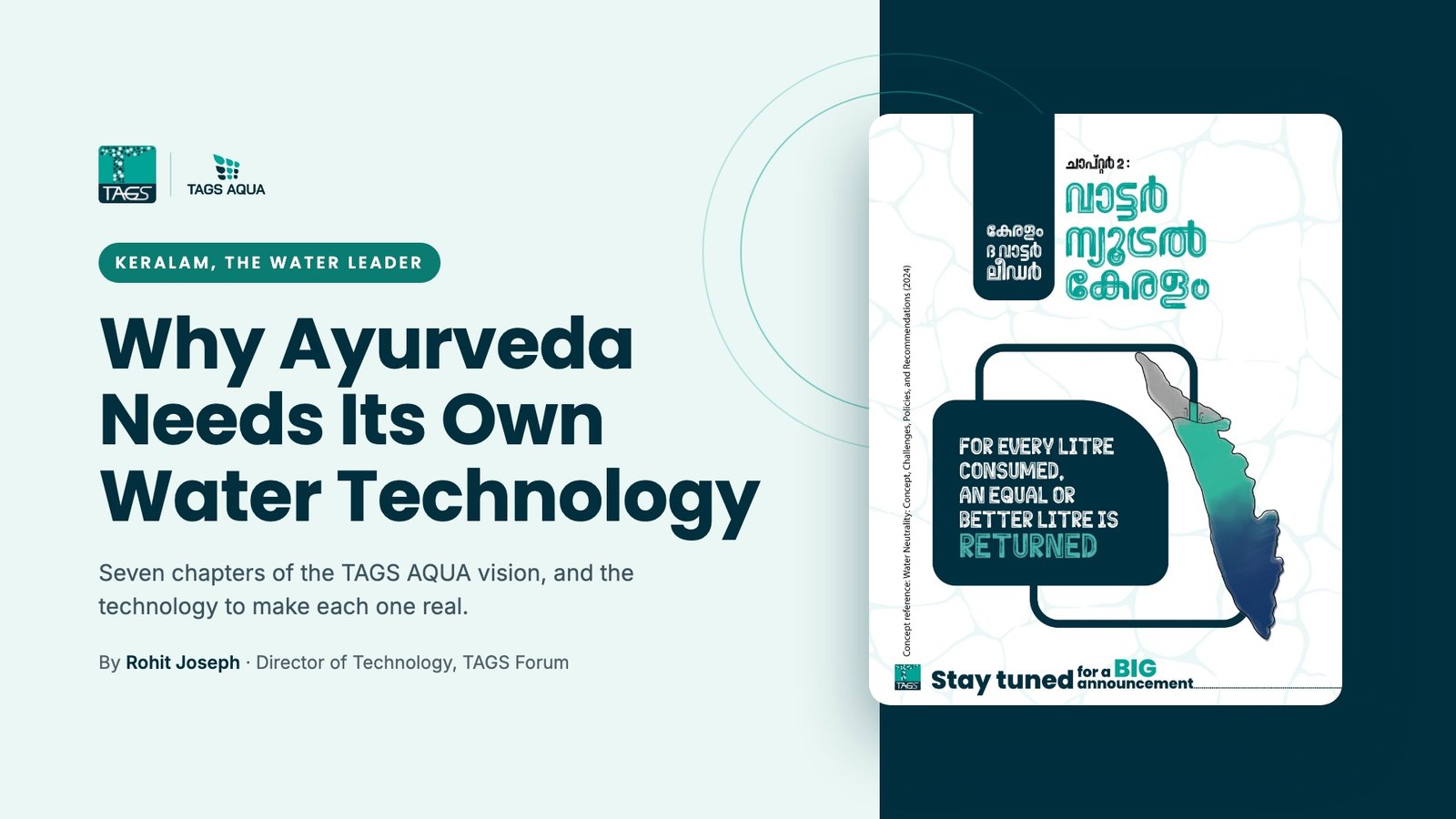
Water Neutral Keralam
വാട്ടർ ന്യൂട്രൽ കേരളം
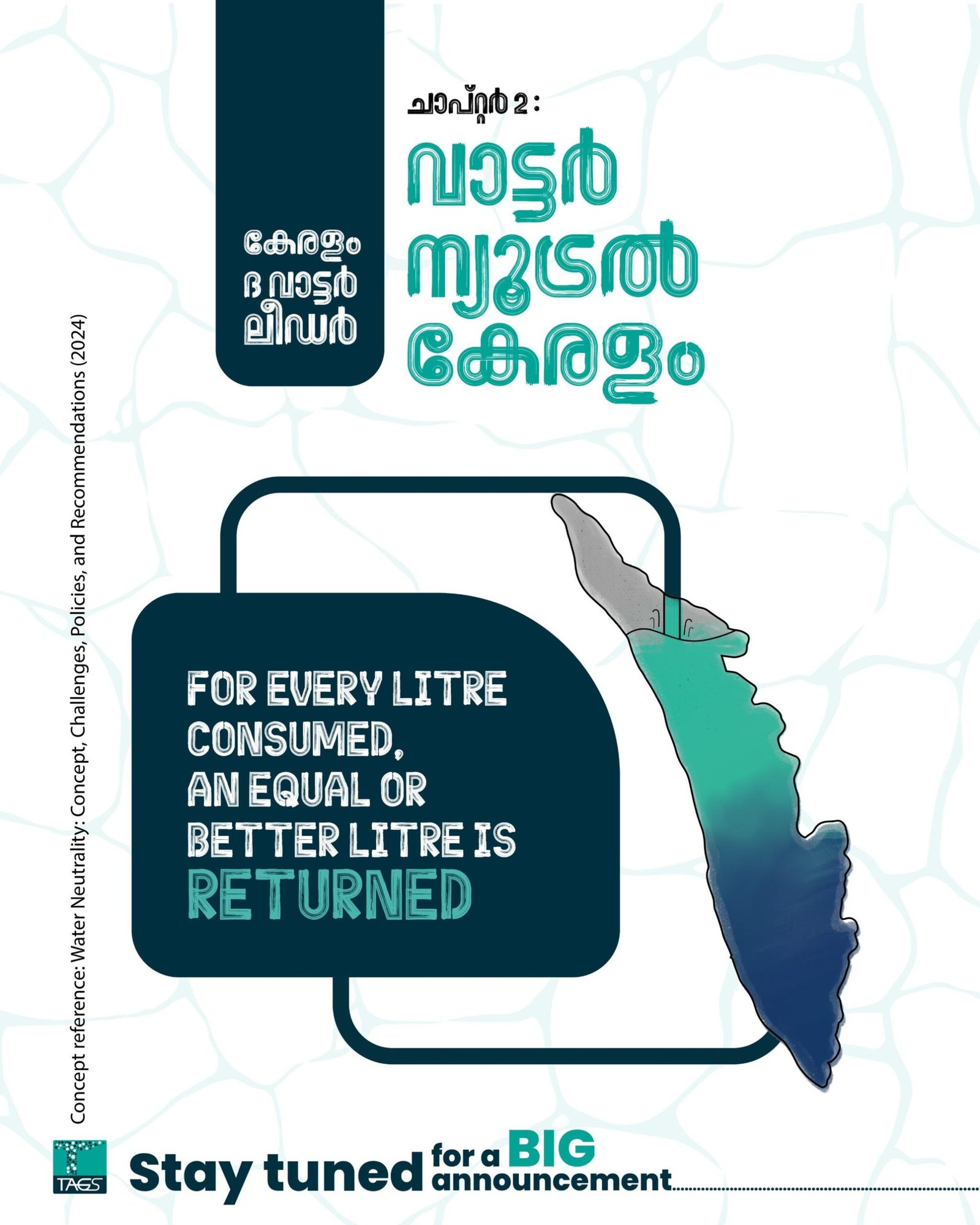
The second chapter set the goal: for every litre consumed, an equal or better litre is returned. For an Ayurvedic institution, the hardest part of that promise is the oil.
- Oil in Ayurvedic wastewater does not simply float. When medicated oils meet hot water, soap and traditional bath powders such as incha and payar podi, they tend to form an emulsion, finely mixed through the water. In that state, an ordinary grease trap cannot separate it.
- The most effective fix therefore comes before the streams mix, not after. Collecting oily water from therapy rooms and laundry separately at source, and keeping it apart from toilet sewage and clean greywater, makes every later step cheaper and more reliable.
- Where oil has already emulsified, newer methods can break it. In a lab study on raw Ayurvedic hospital wastewater, electrochemical coagulation removed 96% of oil and grease, 61% of COD and 96% of colour.
- Once the oil is out, the rest of the water can be treated and reused for gardens, flushing and cleaning instead of being discharged.
For the hospital, this is where the savings are. Reused water cuts water bills and tanker costs, which matters most for tourism-linked centres whose busy season is the dry summer. Removing oil before it reaches the treatment plant keeps the plant working and helps meet the Pollution Control Board’s 10 mg/l limit for oil and grease, avoiding notices and trouble at consent renewal. And a measurable claim of water-neutral treatment is something an institution can show to wellness tourists and ESG-minded partners.
Water with a Memory
ഓരോ തുള്ളിയും യാത്രയിലാണ്

The third chapter imagined water that remembers. The same water moves through many forms: rain, river, drinking water, medicine, sweat and body fluid, and finally wastewater. The idea was that every drop should carry a record of how we used it, how we polluted it and in what form we gave it back.
For a hospital, that memory does not need an expensive network of sensors in every room:
- One meter where water enters the premises and one where treated water leaves are enough to build a basic water balance.
- A monthly lab test of the treated water adds the quality side of the record.
- A simple digital log of both, kept over time, turns scattered numbers into a history of the institution’s water.
That record pays for itself. It keeps the institution ready for Pollution Control Board inspections and consent renewals. It can also be shared with guests, for example through a QR code in the room showing how the water used in their treatment was cleaned and returned. In wellness tourism, that is a story few competitors can tell.
Water Infra Cognition
സ്വയം പ്രവർത്തിക്കുന്ന പ്ലാന്റുകൾ
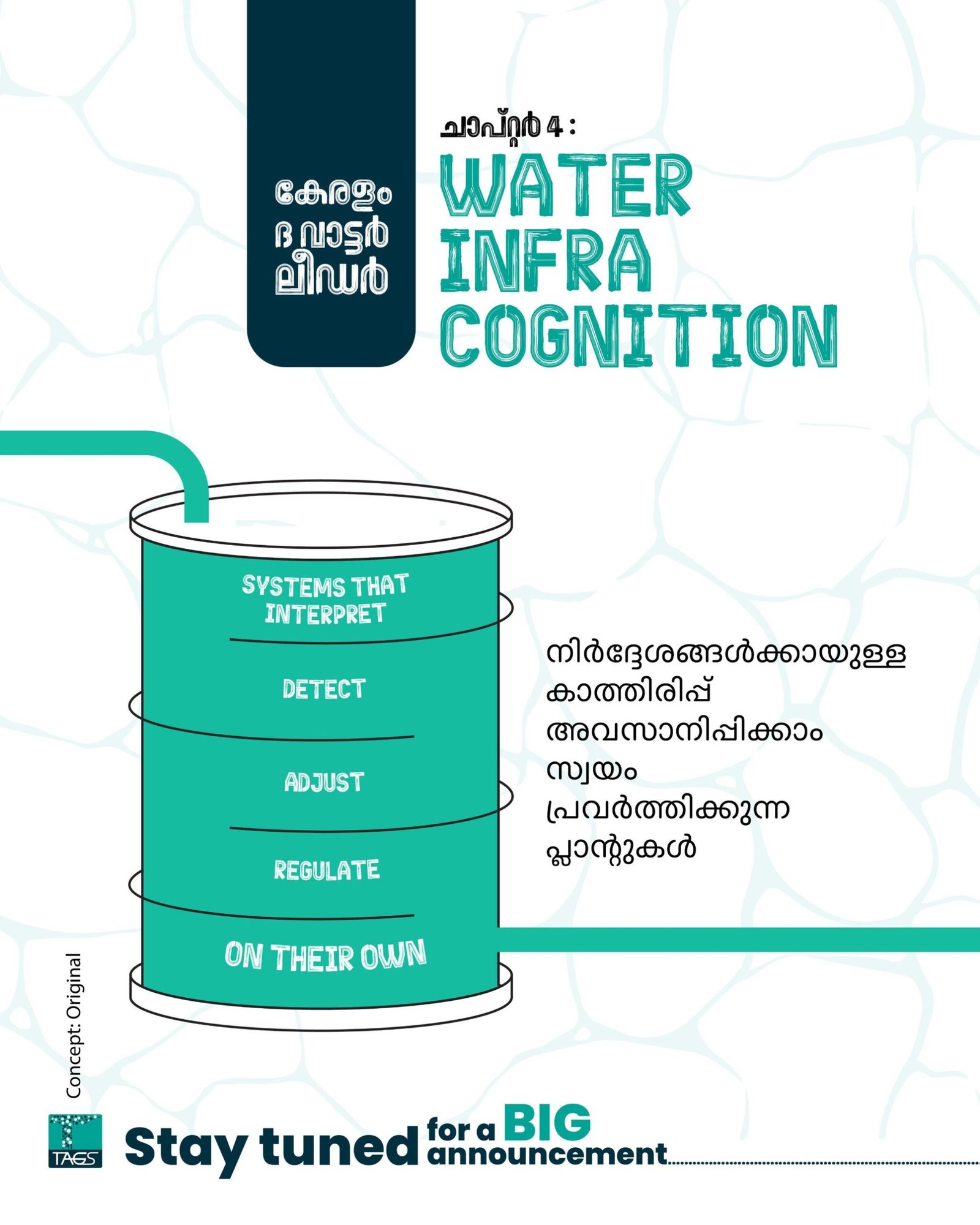
The fourth chapter described treatment plants that no longer wait for instructions, but interpret, detect, adjust and regulate on their own. Most plants fail quietly: sludge builds up unnoticed, a pump wears out, and the first sign of trouble is a smell or a complaint. Ayurvedic plants are especially exposed, because their load swings with peak seasons like Karkidakam and with the treatments done each day. The technology to catch these problems early already exists:
- Sludge level sensors watch the settling tanks continuously and signal when sludge needs to be removed, instead of relying on someone remembering to check.
- Tracking a pump’s vibration, motor current and bearing temperature can show that it is wearing out before it actually fails.
- Alerts can go straight to the operator’s or manager’s phone. Packaged plant makers in India now market AI-based predictive maintenance for pumps and blowers, and a 2024 research review describes AI being used for real-time monitoring and fault detection in treatment plants, with many pilot projects underway.
- The same data shows when a plant is approaching its limit, which links directly to the next chapter.
For the hospital, this means fewer sudden breakdowns, fewer emergency repair bills and less risk of untreated water escaping. It also means one trained operator can look after several plants remotely, instead of every institution needing its own full-time staff.
Plug and Play Water Systems
ഇനി വാങ്ങി സ്ഥാപിക്കാവുന്ന സ്മാർട്ട് ഉൽപ്പന്നങ്ങൾ
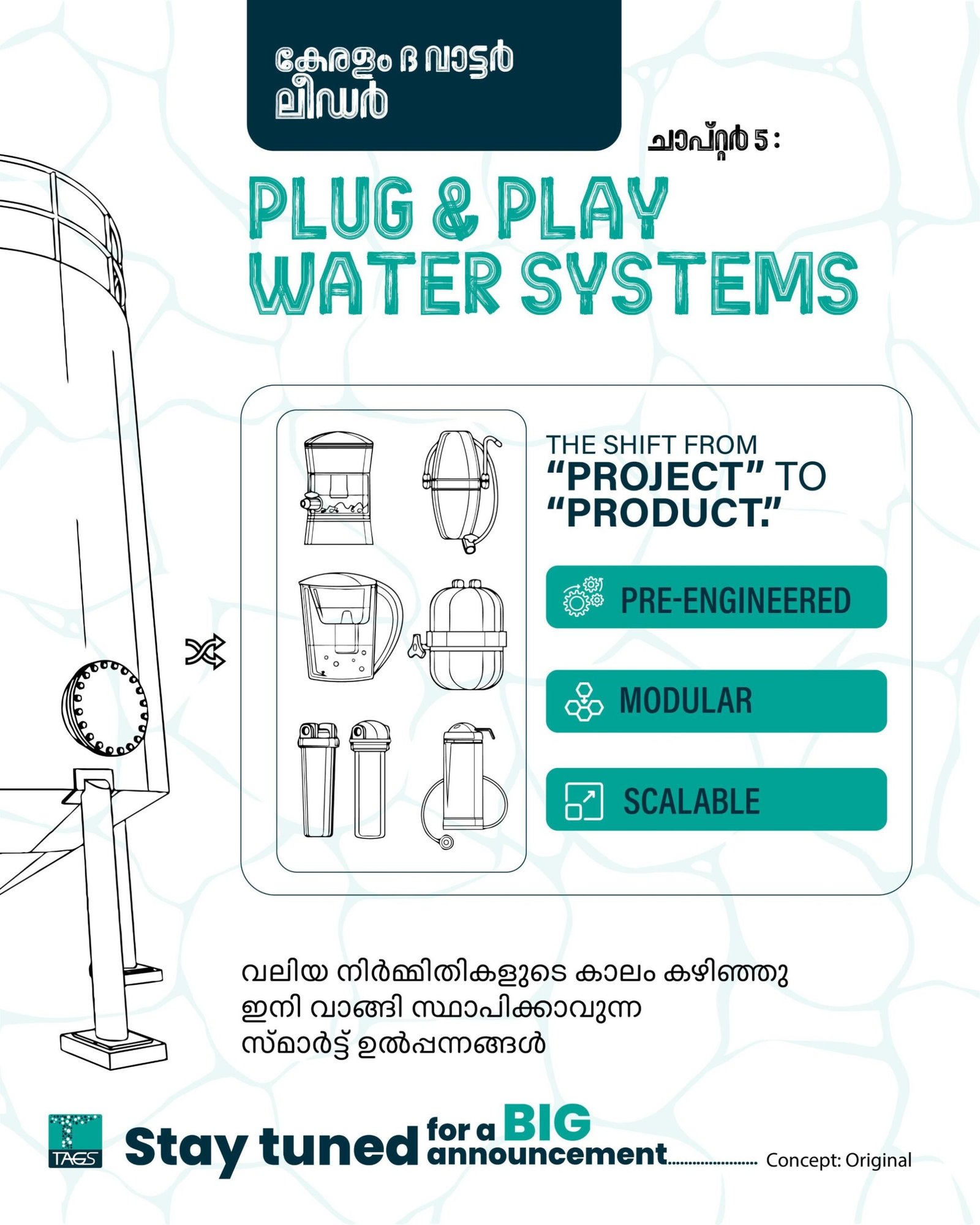
The fifth chapter described a shift from “project” to “product”: pre-engineered, modular and scalable water systems that can be bought and installed, instead of large civil constructions.
- These products already exist in India. Manufacturers such as SUSBIO offer prefabricated units in fibre-reinforced plastic (FRP) that combine anaerobic and MBBR treatment, and describe them as modular and expandable as demand grows.
- For Ayurvedic wastewater, any such biological unit needs an oil separation stage in front of it. Without that, oil reaches the unit and harms the bacteria that do the treatment.
- The bigger question is how to plan for growth. Hospitals usually size their plant for a ten- or twenty-year forecast. That ties up money in capacity that sits idle for years. A biological plant running far below its design load also tends to perform poorly, while its blowers and pumps, sized for the full load, keep drawing power.
- Modules have trade-offs too. Capacity bought in smaller units can cost more per litre, and more units mean more to look after.
- A practical middle path is to build the parts that are hard to change later, such as the land set aside, pipelines, equalisation tank and oil separator, for the long-term load, and to add treatment modules only as the load actually grows. The sensors from Chapter 4 show when the next module is needed, before the plant is overloaded.
Over the life of the plant, the total cost can come out broadly similar either way, but the risk is far lower: no large upfront spend on capacity the hospital may never use, no tearing down a working plant when it expands, and no failures in the busiest season. Where growth is certain, for example when a second block is already planned, building the larger plant at once can still make sense. The goal is a plant that grows with the institution, not one the institution outgrows.
Water Talks to Water
ശുദ്ധീകരണ പ്ലാന്റുകളും ജലാശയങ്ങളും സംസാരിക്കുന്നു
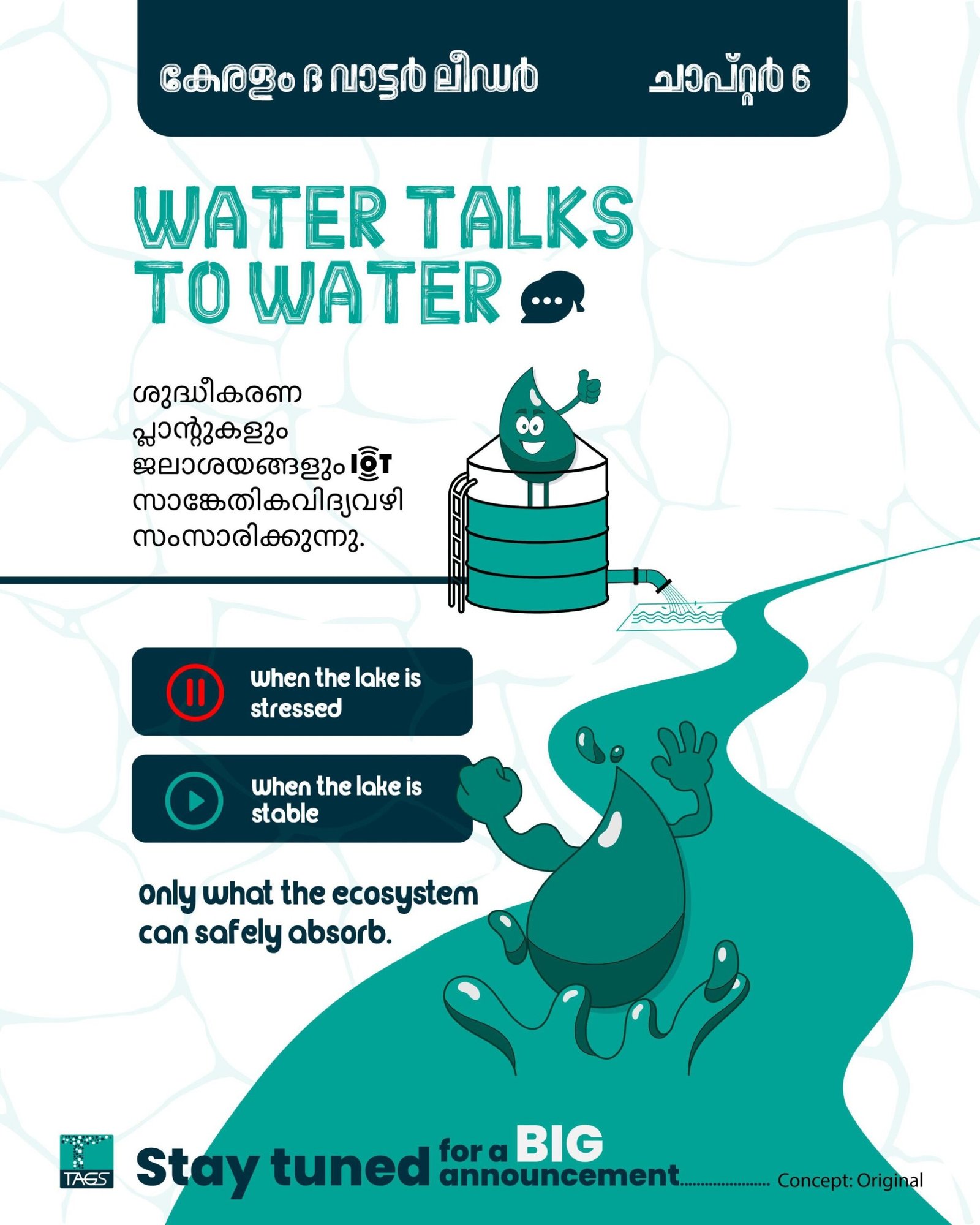
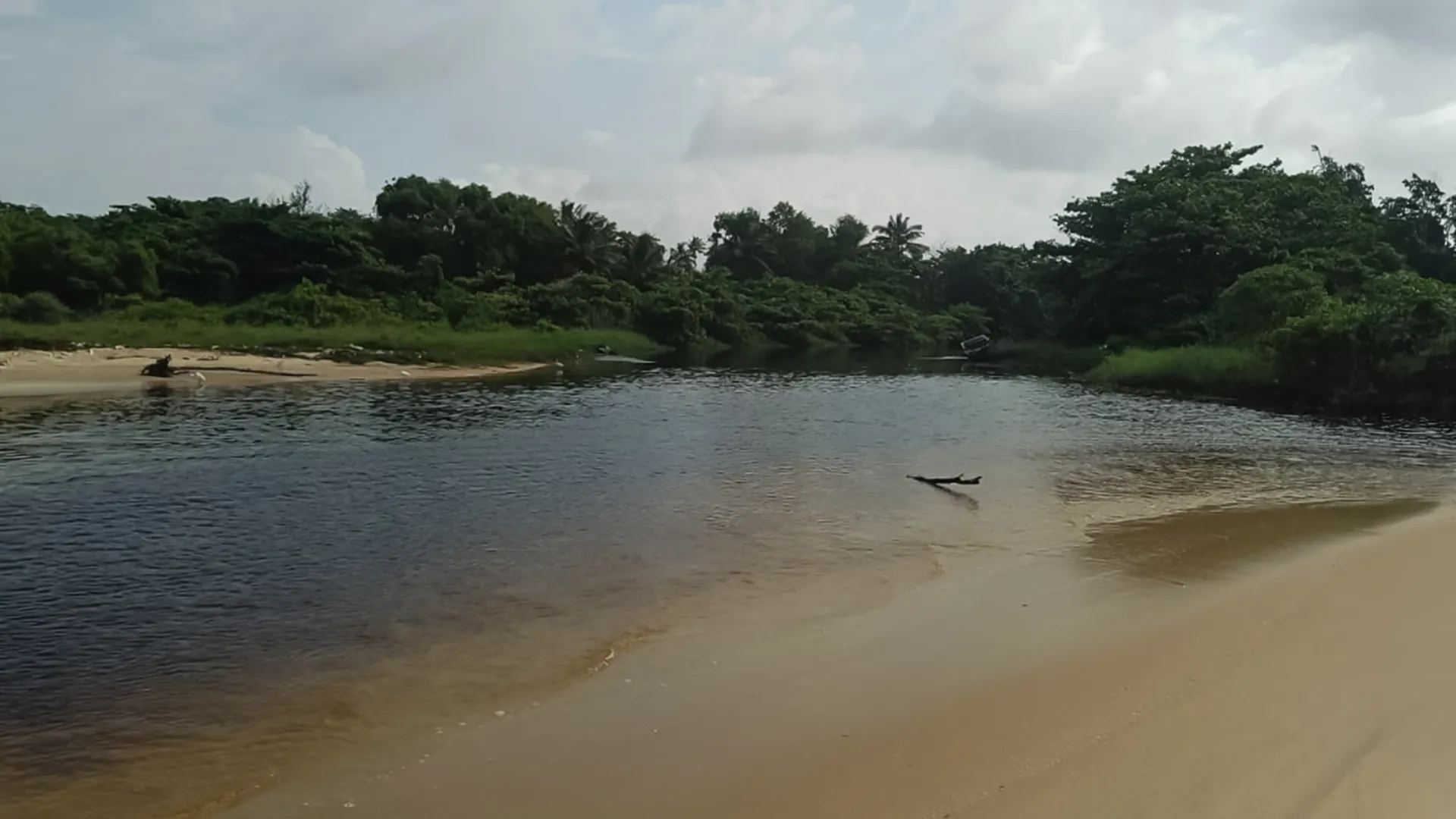
The sixth chapter imagined treatment plants and water bodies talking to each other. Pollution cannot be stopped completely; it can only be managed. Emissions from a chimney are managed with the wind, temperature and weather in mind, and water should be no different. Every canal, river or backwater has a limit to how much treated wastewater it can safely absorb, and a plant should release water with that limit in view.
For Ayurvedic institutions, the season changes that conversation:
- Regular Ayurvedic centres are busiest in the monsoon, around Karkidakam. Canals and water bodies are full and flowing, so treated water is diluted quickly and discharge is easier. The challenge then is different: drains overflow, and in coastal areas with a high water table, water simply does not soak into the ground.
- Tourism-linked centres are busiest in summer, when canals and water bodies run low. Treated water then needs to be cleaner than usual, or kept on site and reused rather than released.
- A plant can be designed with two seasonal modes: standard treatment in the monsoon, and an extra polishing step with more reuse in summer. Level or flow readings from the receiving water body can help decide when, and how much, to release.
- Pollution Control Board discharge standards apply in every season. Seasonal operation means going beyond that minimum when the water body is most vulnerable, never falling below it.
For the hospital, extra treatment is spent where and when it matters most, rather than at the same high level all year. It also avoids conflict with neighbours and communities who depend on the same canals and backwaters.
Gen Aqua
നാം ഓർമ്മിക്കപ്പെടും
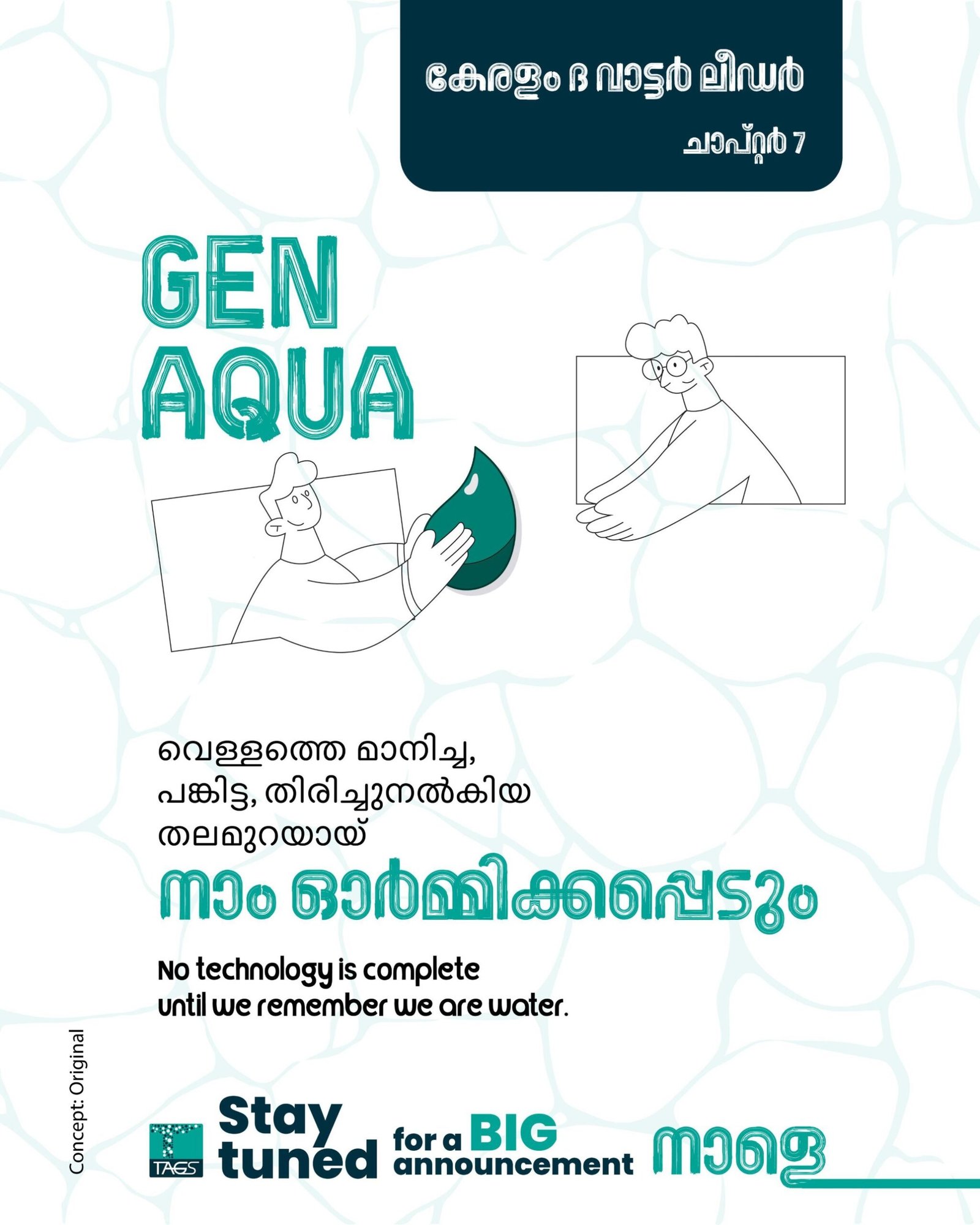
Technology, however, can only take us so far, which is why the series ended with people rather than systems. The seventh chapter was about the generation we hope to be remembered as: one that respected, shared and returned water. As the poster puts it, no technology is complete until we remember we are water.
Ayurvedic institutions are well placed to lead that generation. As the industry that turns Kerala’s biodiversity into health care, tourism and income, it has both the most to gain from protecting that base and the most to lose if it is damaged. In practice, leadership looks ordinary:
- Simple dashboards in staff areas showing daily water use, oil recovered and water reused.
- Short training for therapists, laundry and kitchen staff on why each stream is kept separate.
- Display boards that show guests how the institution treats and returns its water.
That visibility has commercial value as well. In Booking.com’s 2025 global survey of more than 32,000 travellers, 93% said they want to make more sustainable travel choices. Turning that intention into actual bookings is still a challenge for the travel industry, but wellness destinations that can show real numbers on water will be best placed as it happens.
On the eighth day of the series, we launched TAGS AQUA to help make these chapters real.
One approach does not fit every institution
Ayurvedic institutions range from a few therapy rooms to large hospitals and resorts, and many are run by the government. The ideas above apply differently to each:
Small clinics and treatment centres
Oil captured at source, a well-maintained grease trap and a basic water record, with a meter at the inlet and a monthly test. Where possible, a shared or packaged treatment unit rather than one of their own.
Medium hospitals
Separate lines for oily water, oil separation in front of a modular packaged unit, treated water reused for gardens and flushing, and simple sludge and pump sensors.
Large hospitals and wellness resorts
Long-term civil works with modular treatment added as they grow, seasonal operating modes, remote monitoring, and discharge planned around the receiving water body.
Government Ayurveda institutions
Standard, tested modular designs that can be repeated across many sites, with remote monitoring so one trained team can look after several institutions.
The business case for acting now
Taken together, these seven chapters add up to a strong case for any Ayurvedic institution. It spends less on water and on the energy needed to heat and treat it. It recovers value from its waste in the form of oil, biogas and compost. It avoids the cost and disruption of failing plants and compliance trouble, and it doesn’t have to rebuild its system every time it expands. Most importantly, it protects the two things its business is built on: the medicinal plants and ecosystem that supply it, and the clean, natural image that health tourists are willing to pay for, which is also the image of Kerala as a destination.
None of this needs technology that doesn’t exist yet. What the sector needs is a design approach built around its own waste and Kerala’s ecosystem, instead of a standard plant borrowed from somewhere else. In the end, the industry that turns Kerala’s biodiversity into income is the one with the most to gain, and the most to lose, in protecting it.
We remembered we are water.
And everything changed.
That line sums up what TAGS AQUA hopes for Kerala. For the Ayurvedic industry, the tools to act on it are already here.
Rohit Joseph is Director of Technology at TAGS Forum (Technology and Governance Support Forum), Alappuzha. TAGS AQUA is the water and sanitation wing of TAGS Forum.